

Carlos Mullor Martínez
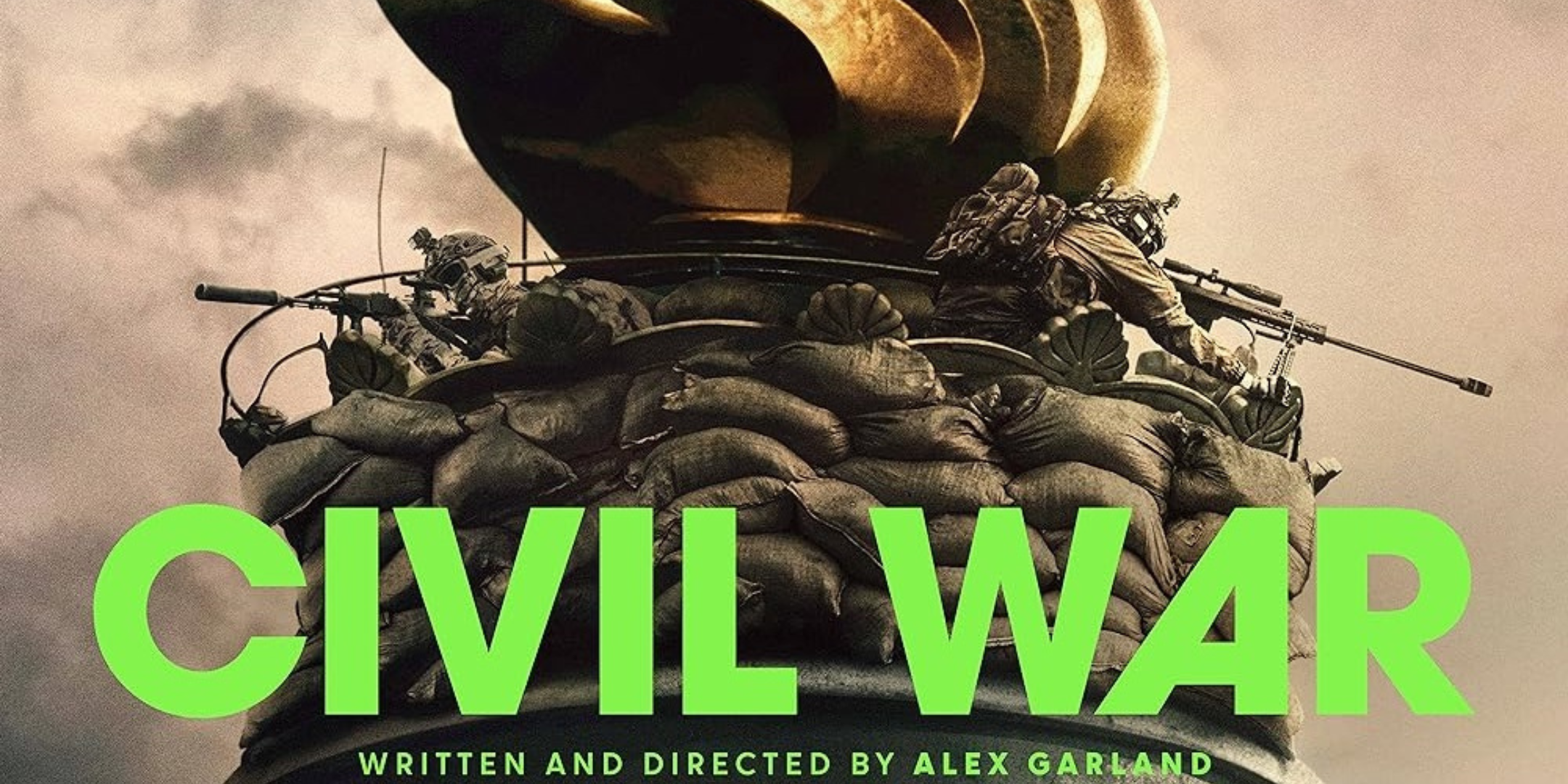
Alex Garland’s latest movie represents an ambitious and eerie experience that explores the
political conflicts that democracies face in our present. Released just before the U.S.
elections of 2024, the movie reflects concerns for the future while making use of the nowadays
fears of division, populism, and extremism. As usual, Garland does not give easy answers or
offers approachable conclusions; he invites the spectator to an uncomfortable and provoking
experience.
The plot of Civil War is simple, but at the same time possible in a close future: a dystopian U.S.,
suffering a civil conflict between the government of the country and the allies Texas and
California, a situation that may feel viable according to the current political climate that
The United States currently faces. The film follows four different war journalists around the
country, led by the seasoned reporter Sarah played by Kirsten Dunst, documenting the chaos
and trying to get an exclusive interview with the now authoritarian President of the United
States, who months before authorized drone attacks against the population and disbanded the
FBI. Dunst portrays a war journalist’s emotional journey, marked by trauma but driven by
journalistic integrity.
This realism in the journalism aspect creates a bigger picture to the story, even more
in the interactions with the emergent character of Cailee Spaeny, who plays a young, idealistic,
happy photojournalist, who is covering her first conflict with an old analog camera. These two
females from different generations and on different journeys create a big contrast within the
same film story.
Wagner Moura, who is characterized as the journalist specialized in writing, in pursuit of the
interview with the president, offers an appealing performance but in today’s world, it’s highly
unlikely to find a war journalist without a camera or even a cell phone, making Moura’s
character feel outdated; the real surprise, however, is Jesse Plemons, being the standout in his
performance of a psychopathic military officer, making a big impression despite his short screen
time. Stephen McKinley Henderson is an «old glory» of war journalism during the movie, his
character remains silent and calm during the conflict, a personality like his was needed to create
a contrast during a war where, in his own words, “everyone is killing everyone”.
Garland’s direction in Civil War carries his signature: visually stunning with thematic darkness.
Like Ex-Machina and Annihilation, Civil War is a visually impressive movie, but focuses on a
more realistic approach, where it’s possible to observe the real rawness of a dehumanized
conflict. There’s one sequence in particular, set to the nostalgic music of Sturgill Simpson, in
which the characters drive through a burning forest, a big contrast between the natural beauty
and violent destruction that reflects the annihilation of war.
Thematically, Civil War explores dehumanization that wars and civil conflicts creates, the
impact that journalism have in the public opinion, and the fragility of government in
democracies during our times. It is a film about extremism and how it destroys humanity and
morality. It is a deeply political film, though not in the way one might expect. Rather than
copying a conflict that is going on during the present, Civil War creates its own realistic and
possible conflict in a near future.
Public reviews have been mixed. Though many viewers supported the performances and
political messages, it is also targeted by the slow pace and the «unrealistic» political situation
in the U.S. The main critique by some is Garland’s slow speed during the movie, but, actually,
this allows the characters to evolve during the film. At the beginning, one is able to see Kirsten
Dunst as an unfriendly and selfish person, while during the film it’s possible to see how she
starts supporting Cailee Spaeny and assimilating that “mother” protection that will be crucial
at the end of the story.
The soundtrack and sound design are crucial during the film to create the tense feeling that
war generates, but the moments of pure silence created when the protagonists are in danger
or when a picture is taken creates much more tension than any song in the movie. Garland
pushes strongly with sound, drawing the audience deeper into the disorienting and tense
world of the film.
Civil War by Alex Garland challenges the audience with a provocative but visually striking film
that refuses to give easy answers. By focusing on the fragile democracies in our present and the
despumating wars, Garland creates an eerie comparison with today’s
world. As compared with Ex-Machina or Annihilation, Civil War is more concerned about
human emotion and social critique. This reasoning could leave some viewers unsatisfied,
particularly for those who wanted more political commentary, but this is, partly, the reasoning
that makes Civil War a powerful reflection of modern conflict: it is an echo of real-life puzzles
and mysteries that are not so easily explained, it refuses to reduce problems to simplistic
answers. It is for this reason that the series challenges viewers to engage in a more intense
way: to think about the world we live in critically and to face uncomfortable realities-division
and extremism